
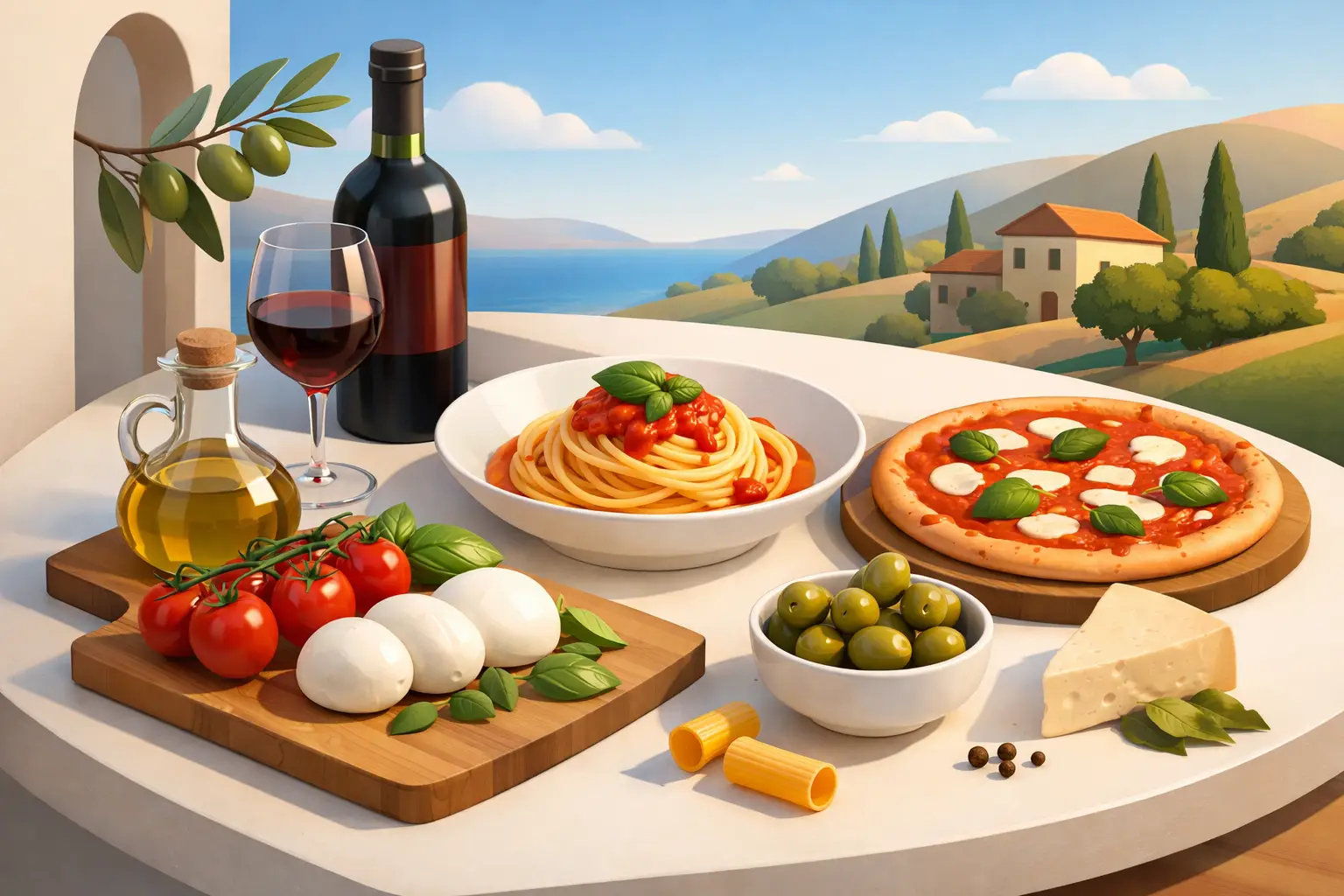
One of the easiest ways to spot the difference between a meal that feels Italian and one that simply borrows the name is this – how much is the food trying to impress you? True Italian food 2026 is not about piling on toppings, overworking a sauce or turning dinner into a stunt. It is about restraint, confidence and the kind of cooking that trusts good ingredients to do the heavy lifting.
That matters more than ever. Diners are sharper now. People know when a pizza base has been rushed, when a pasta sauce has been sweetened to cover shortcuts, and when a menu is using the word authentic without much to back it up. At the same time, people still want dinner to feel easy. They want a place that can handle family night, a relaxed date, takeaway for the couch, or a quick glass of wine and a proper plate of pasta without any fuss. Real Italian food has always had room for both quality and comfort, and in 2026 that balance is exactly the point.
What true Italian food 2026 really means
If you strip away the marketing language, true Italian food 2026 comes down to a few timeless ideas. Start with tradition, but do not freeze it in time. Use proper technique. Respect regional logic. Buy well. Cook simply. Serve generously. Make the meal feel social, not staged.
Italian food has never been one single thing. Sicily does not eat like Tuscany. Rome does not cook like Naples. Even within regions, recipes shift from town to town and family to family. So authenticity is not about claiming there is only one correct version of every dish. It is about understanding where a dish comes from, why it is made that way, and which elements are worth protecting.
That is where many restaurants get it wrong. They chase the visual cue of Italian food without the deeper habits behind it. A tricolore garnish does not make a dish Italian. A wood-fired oven on its own does not guarantee a proper pizza. The real markers are quieter than that – dough handled with patience, tomatoes that taste of tomatoes, olive oil used with purpose, pasta cooked with judgement, and a menu that knows when to stop.
Tradition matters, but so does judgement
There is a strange idea floating around that authentic food must reject change altogether. In practice, Italian cooking has always evolved. Ingredients travelled. Techniques shifted. Local cooks adapted to what was seasonal, affordable and available. The best Italian kitchens still do exactly that.
So the question is not whether change is allowed. The question is whether the change makes sense. Using excellent local produce is completely in step with Italian tradition, because Italian cooking has always leaned on the best ingredients close at hand. The same goes for offering a dining experience that suits modern life, whether that means a family table early in the evening or restaurant-quality takeaway on a weeknight.
Where things become less convincing is when novelty overrides flavour. A pizza overloaded with six cheeses, truffle oil and random sauces may look dramatic, but it drifts away from the balance that makes Italian food so satisfying in the first place. More is not always more. Quite often, it is just noise.
Why simplicity is harder than it looks
Simple food leaves nowhere to hide. If you are making a margherita, every element is exposed. The dough has to be right. The tomato has to have brightness and depth. The mozzarella has to melt properly without drowning the base. The char from the oven should add flavour, not bitterness.
The same goes for pasta. A short ingredient list sounds easy until you realise each part has to carry its weight. A cacio e pepe without technique becomes claggy. A ragu cooked without patience tastes flat. A seafood pasta made with second-rate produce has no chance, because there is no heavy cream or sugar to disguise what is missing.
That is one reason genuine Italian food still feels fresh in 2026. It asks for discipline. It rewards kitchens that care about process, not just presentation.
The role of craft in true Italian food 2026
Good Italian food often looks relaxed on the plate, but behind that ease is real craft. Dough fermentation is a perfect example. Give pizza dough enough time to rest and develop, and you get better flavour, better texture and a lighter result. Rush it, and the difference is obvious from the first bite.
Heat matters too. A properly hot oven changes the character of a pizza – the lift in the crust, the blistering, the way the topping and base finish together rather than separately. These are not chefy details for their own sake. They are the details that make a meal memorable.
The same thinking runs through the rest of the menu. Stock made properly tastes fuller. A sugo given time to settle tastes rounder. A tiramisu made with care has balance rather than sugar overload. Authenticity is not performance. It is consistency built on technique.
For neighbourhood diners, this is often what separates the places you try once from the places you return to. People may not always describe fermentation times or sauce reduction in technical terms, but they know when food feels honest, satisfying and worth ordering again.
Ingredients still lead the conversation
If there is one thing shaping Italian dining right now, it is a renewed respect for ingredients. Not luxury for luxury’s sake – just ingredients with character. San Marzano-style tomatoes that bring sweetness and acidity. Proper fior di latte. Parmigiano Reggiano used because it tastes right, not because the menu wants to name-drop. Local vegetables chosen in season rather than treated as permanent decoration.
Imported products still matter, especially when they carry distinct flavour and regional identity. But there is no contradiction in pairing those with excellent local produce. In fact, that balance often creates the best version of Italian dining in Australia. You keep the soul of the dish while cooking in step with your own place.
That matters for diners in neighbourhoods like Elwood and across Bayside, where people want quality but not pretence. They are happy to appreciate a beautiful Italian wine or a well-made aperitivo, but they also want dinner to feel grounded and welcoming. The table should feel generous, not theatrical.
Wine, aperitivi and the full table
Italian food makes the most sense when it is seen as more than a single plate. A meal can start with a spritz or a glass of Prosecco, move into pizza or pasta, and settle into a red like Chianti Classico, Sangiovese or Nero d’Avola. None of that needs to feel formal. It just completes the rhythm of the table.
That social side is central to the Italian way of eating. Dinner is not only about filling up. It is about staying a little longer, sharing, talking, passing plates, ordering another glass because the evening is going well. Even takeaway can hold onto some of that spirit if the food arrives with the same care and balance it would have in the restaurant.
What diners should look for now
In 2026, authenticity is less about big claims and more about small signs. Look for a menu that shows restraint. Look for classic combinations that have a reason to be there. Notice whether the pizza crust has structure and flavour rather than just puff. Notice whether the pasta tastes fresh and composed rather than overloaded.
It is also worth paying attention to how a venue makes people feel. Real hospitality is part of real Italian dining. That means families are welcome, kids can eat well, regulars are remembered, and ordering takeaway does not feel like an afterthought. The best local Italian restaurants understand that quality and warmth belong together.
There is also room for value. Authentic food does not have to be reserved for special occasions. A good pizza night, a straightforward pasta after work, or a casual dinner with friends can still be made with care. In many ways, that everyday reliability is one of the strongest signs of a genuine Italian kitchen.
Why true Italian food 2026 feels timely
Perhaps the reason people keep coming back to Italian food is that it answers a modern problem with an old solution. Life gets busy, noisy and overcomplicated. A genuinely good meal built on dough, tomatoes, cheese, olive oil, wine and conversation cuts through all of that.
Not because it is nostalgic, although there is comfort in tradition. And not because every dish must remain untouched forever. It works because the principles are sound. Cook with patience. Keep it balanced. Choose ingredients with care. Feed people properly. Make room for pleasure.
That is why the phrase true Italian food 2026 should not make us think of reinvention for its own sake. It should make us think of craft that still holds up, hospitality that still matters, and meals that are generous enough to fit real life. If a restaurant can deliver that, whether you are dining in with family or picking up dinner on the way home, it is doing something worth returning to.
The best Italian food still feels like a welcome – simple, confident and made to be shared.
Leave a Reply