
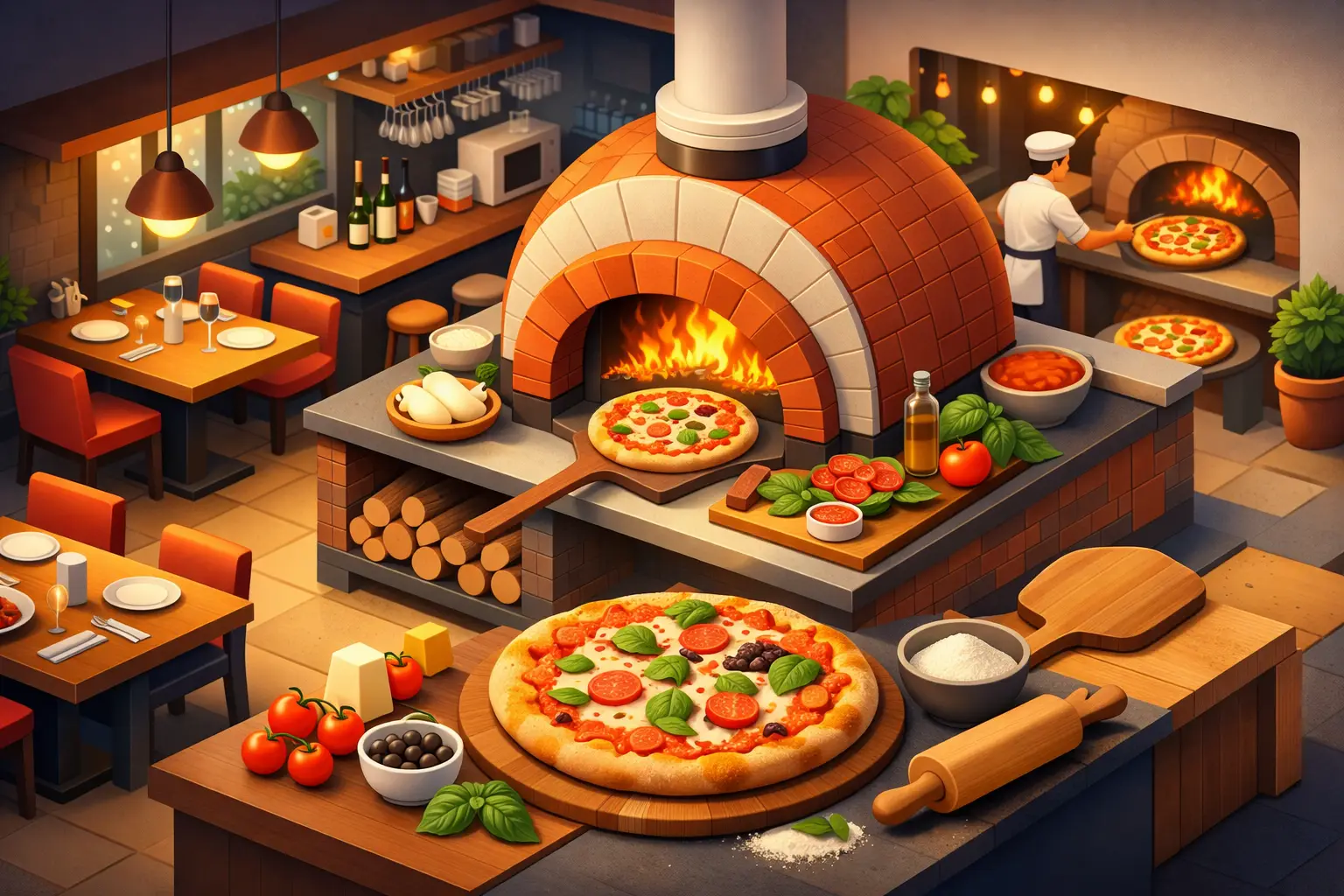
You can tell a lot about a wood fired pizza restaurant before the first slice hits the table. It’s in the smell of the oven, the look of the dough as it rises at the edge, and the pace of the room when families, couples and groups all settle in comfortably. Great pizza matters, of course, but so does everything around it – the welcome at the door, the balance of the menu, the wine poured into the glass, and the simple feeling that this is a place you’ll want to come back to next week.
That’s the difference between somewhere that merely serves pizza and somewhere that earns a place in the neighbourhood. A proper local favourite gets the craft right, then makes it easy to enjoy, whether you’re sitting down for dinner, grabbing takeaway on the way home, or ordering in when everyone wants a night off cooking.
Why a wood fired pizza restaurant feels different
Wood-fired cooking changes more than the pizza itself. At high heat, the dough puffs quickly, the crust picks up char in the right spots, and the toppings cook fast enough to stay distinct. You get blistered edges, a base with structure and chew, and ingredients that still taste like themselves rather than melting into one heavy layer.
That speed matters. A pizza cooked at around 400°C doesn’t linger in the oven long, which helps preserve freshness and texture. Tomato stays bright. Fior di latte softens without becoming oily. Prosciutto, basil, mushrooms or olives each keep their own place on the palate. When the oven, dough and toppings are in balance, the result tastes lighter than many people expect.
There’s also a social side to a wood-fired room. The oven becomes part of the atmosphere, not just the equipment. It brings warmth, movement and a little theatre to the dining experience. For a casual date night, a family dinner or an easy catch-up over pizza and a glass of Sangiovese, that energy goes a long way.
The dough tells you everything
If you want to judge a pizza properly, start with the dough. Toppings can impress at first glance, but the base is what carries the whole thing. A strong wood-fired pizza restaurant pays close attention here, because dough is where authenticity and skill show up most clearly.
Long-rested dough tends to deliver better flavour and texture. A 48-hour rest, for example, gives the dough time to develop character, making it easier to digest and more nuanced in taste. That doesn’t mean every pizza should be thin and crackly or thick and airy. Different styles exist, and there’s room for preference. But the key is intention. The dough should feel considered, not rushed.
You want a base that holds its shape, with enough structure under the toppings and enough give at the rim. Too crisp, and it can eat like a cracker. Too soft, and the centre can collapse. The sweet spot is a pizza that folds if you want it to, but still gives you a little resistance in every bite.
Ingredients matter, but restraint matters too
A good wood-fired pizza restaurant doesn’t try to hide behind too many toppings. The best pizzas are usually built with confidence and restraint. A tomato base with quality mozzarella, basil and olive oil can be more satisfying than a crowded combination where nothing stands out.
That comes back to ingredient quality. Imported Italian staples bring depth and familiarity, while fresh local produce keeps the menu grounded in season and place. Done well, that mix gives you authenticity without stiffness. It respects tradition but still feels welcoming, not precious.
There’s a practical side to this as well. Better ingredients tend to need less interference. Good passata doesn’t require sugar to make it appealing. Proper cheese doesn’t need to be buried under extras. A handful of mushrooms with garlic, parsley and a little fior di latte can say more than a pile of random toppings ever will.
A great pizza restaurant should work for real life
This is where many places either become part of local routine or stay as an occasional treat. A restaurant can serve excellent pizza, but if it doesn’t fit the way people actually live, it won’t become a true neighbourhood favourite.
Real life dining means different things on different nights. Sometimes it’s a family meal with children, where a kids’ menu, comfortable seating and an easygoing atmosphere matter just as much as the food. Sometimes it’s friends meeting for aperitivi and a couple of pizzas to share. Sometimes it’s takeaway after a long day, when you still want restaurant-quality dinner without setting the table for a full evening out.
That flexibility is part of good hospitality. Indoor and outdoor seating, heated undercover options, dine-in, takeaway and delivery all serve a purpose. None of those things replace quality, but they do make quality easier to access. For local diners, that convenience matters.
More than pizza – the full restaurant experience
A wood-fired oven may be the headline, but a strong Italian restaurant thinks beyond the pizza section. Pasta, sides, desserts and drinks all shape the meal. If the menu is built well, pizza can be the centrepiece without needing to do all the work.
Classic pasta dishes give diners another reason to return, especially when a group wants variety. A child might want a simple bowl of pasta, while someone else is set on a margherita or a salumi pizza. A balanced menu makes those choices easy rather than awkward.
Drinks deserve attention too. Italian aperitivi set the tone early, and wine should feel like a natural extension of the food. Chianti Classico, Nero d’Avola, Primitivo, Prosecco, Pinot Grigio and Sangiovese all bring something different to the table. The point isn’t to overwhelm people with a wine lecture. It’s to offer pairings that feel generous, approachable and well matched to the meal.
Dessert, meanwhile, should feel like an invitation rather than an obligation. When the room is warm, the service is relaxed and the table is lingering happily, a simple sweet finish makes sense.
What hospitality looks like in a wood fired pizza restaurant
Plenty of places can cook. Fewer know how to host. That’s especially important in a neighbourhood setting, where guests are not looking for performance. They want to feel looked after without fuss.
Warm service is often made up of small things. Staff who make room for a pram without making it a drama. A quick recommendation when someone can’t decide between two pizzas. A sense that ordering takeaway is treated with the same care as dining in. These details don’t sound glamorous, but they’re what build trust over time.
There’s also value in consistency. Diners come back when they know the pizza will be just as satisfying on a busy Friday as it was on a quiet Tuesday. Specials and promotions can help, especially on local weeknights, but they only work when the standard remains high.
For many people around Elwood and the wider Bayside area, that’s what makes a place part of the regular rotation. It feels dependable, generous and easy to enjoy.
Choosing the right wood fired pizza restaurant for your night
The best choice depends on what kind of night you’re having. If you’re after a quick takeaway dinner, speed and consistency matter most. If it’s a relaxed meal with friends, atmosphere and drinks come further forward. If you’re dining with family, comfort, flexibility and a menu that covers different tastes become essential.
That’s why the strongest restaurants do more than one thing well. They understand that authenticity is not only about technique. It’s also about making people feel welcome. A true Italian meal has always been about shared tables, familiar flavours and the pleasure of eating well without complication.
At Zanini Pizzeria, that idea sits at the heart of the experience – proper wood-fired pizza, traditional pasta, good wine and a local atmosphere that suits both a casual midweek dinner and an easy long lunch or evening out.
A great wood fired pizza restaurant leaves you satisfied before you even think about whether the crust had the right char or the wine was a perfect match. You remember the warmth of the room, the ease of the meal and the fact that everyone at the table found their place in it. That’s usually the sign you’ve found somewhere worth returning to.
Leave a Reply